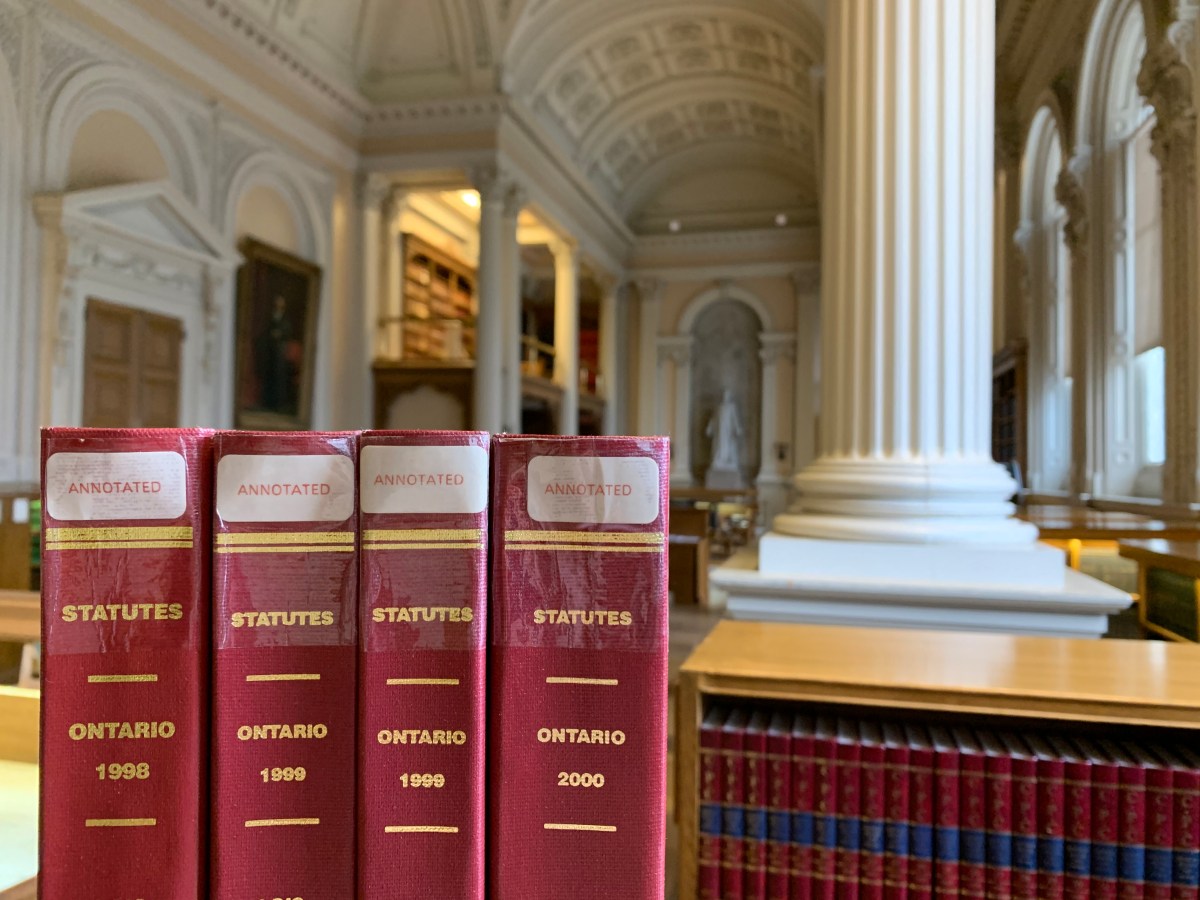
Four annotated volumes of the statutes of Ontario with a background of the Great Library
When conducting legislative research, it’s important to remember that just because a statute has received royal assent, that doesn’t necessarily mean that all of its sections have come into force. This is why it is so important to look through the commencement provisions of the statute in question to discern when the statute will be “fully operational” so to speak.
Unfortunately, deciphering coming into force dates isn’t always as straightforward as looking at these commencement provisions. While these provisions will sometimes neatly list the specific coming into force dates, other times they simply indicate that the statute will come into force “on a date to be determined by Proclamation”.
Proclamations are published in most jurisdiction’s official Gazettes. But luckily you don’t have to sift through piles of weekly Gazettes issues to find the proclamation you need. There are more efficient alternatives:
For Ontario, you can check the Table of Proclamations found on e-Laws, and for federal statutes you can check the coming into force dates in the Table of Public Statutes and Responsible Ministers on the Justice Laws website. These tables can also be found in the print volumes of the Ontario and Federal annual statutes, which have also been digitized by HeinOnline. They can usually be found towards the end of these volumes.
Another source which covers proclamations for all Canadian jurisdictions going back many years is the Great Library’s annotated statute volumes. We annotate our legislative volumes with coming into force information. This means we will actually pencil in the coming into force dates, along with the proclamation information, right next to the relevant provisions. Easy Peasy! Look for the volumes with the “Annotated” sticker on the spine to take advantage of this service, or alternatively, shoot us an email for coming into force information.




 Know How, the blog of the Great Library