

Remote Access to Online CPD Materials

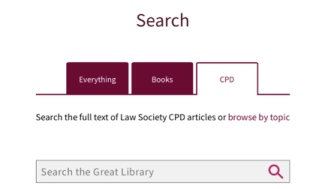
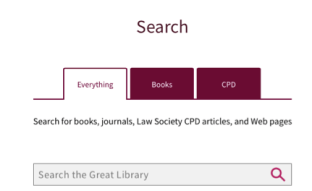
Did you know that you can remotely access continuing professional development (CPD) materials through the Great Library’s catalogue? Whether searching through the “Everything”1or “CPD”tab (shown below), you can search, summon, download and send digitized CPD materials remotely.
  1. option 1.png
  2. option 2.png

Searches using the “Everything” tab are conducted on the search platform InfoLocate. While searches on this platform will summon results other than CPD materials, you can use the filter “Online Law Society CLE Articles” found on the left to narrow your results to only include online CPD materials. See below:
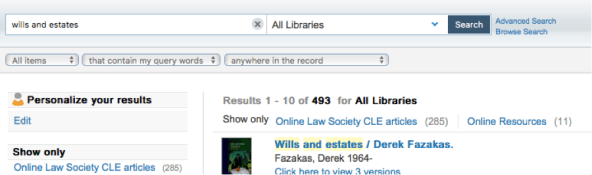
Infolocate.png
                ☝

Searches using the “CPD” tab are conducted using the database AccessCLE. This database is home to hundreds of free, digitized PDFs of Law Society of Ontario CPD materials.

Another place to look for online CPD materials is CanLII. The County of Carleton Law Association CPD materials from 2018 and 2019 were recently made available on CanLII’s “Commentary” platform. Find these by navigating to the “Conference Proceedings” link on the Commentary page, or click here.

Having access to CPD materials can really come in handy as they are a great way to keep up to date on emerging legal issues and can act as primers or introductory overviews of major legal topics in a given field. They are also great tools for finding forms and precedents!

Yes, the Words are Important!

Doing some online research and getting no results? Are you using the right words?

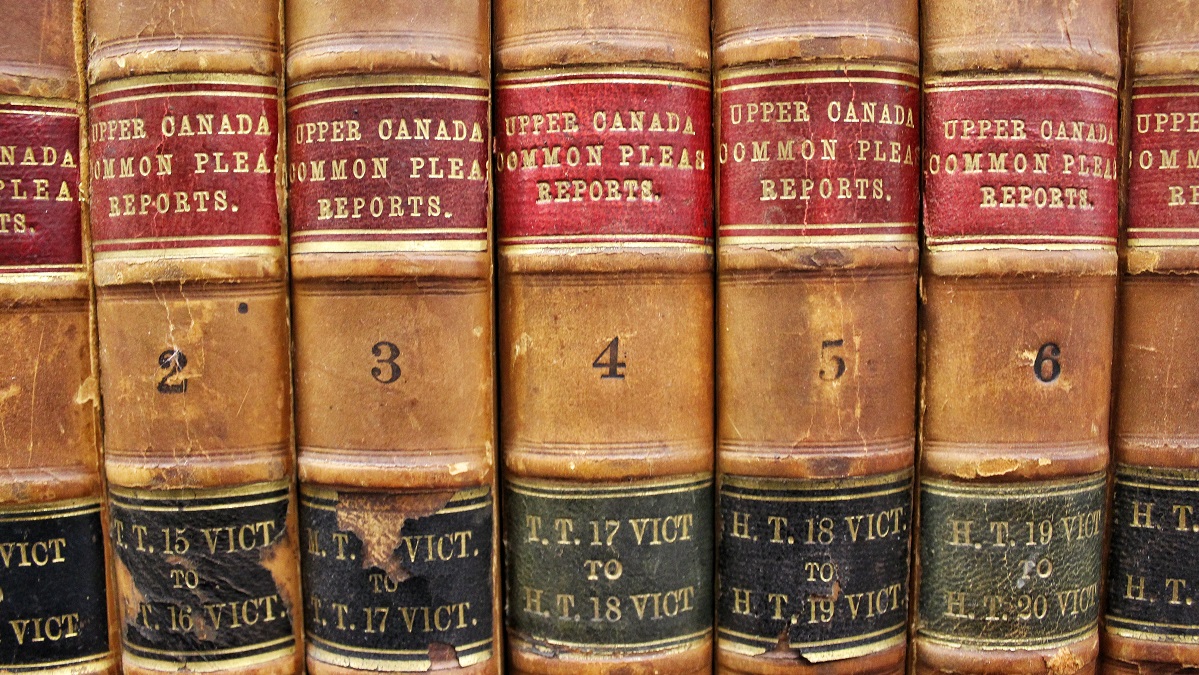
When we did research using print sources, the right terms weren’t as essential as they are today. In the print sources you could browse the table of contents and index, review a relevant chapter, and sometimes even open the book to the exact page you need (serendipity – it has happened, honest!).

Doing research with print provides a context; you’re starting with Waddams’ The Law of Contracts, or Brown on Insurance Law in Canada. As you read you discover other relevant terminology and learn more about the area of law. But with online searching you’re sending words into a void with the hope that the results contain the answer you seek.

So how can you avoid wasting time? Begin with the right words. For example, searching for a precedent for a “motion for rectification” instead of an “application for rectification” will return zero results. If you’re not sure of the right words, first do some research in secondary sources such as Perell & Morden’s The Law of Civil Procedure in Ontario, the C.E.D. (print or through WestlawNext Canada) or books on wills and probate. Secondary sources are your friends!

If your online search still doesn’t pull up relevant results, tweak your search. Instead of using a phrase such as “application for rectification”, try broadening the search and do a proximity search instead: application /5 rectification. Be sure to use the correct connectors for the online source since they aren’t always consistent.

It may seem like a waste of time to begin with some preliminary research to gain context and an understanding of a topic, but in the end it may save you time – because the words are important.

Legal Research Survival Guide, Part 8 –Deciphering Case Citations

Once you’ve mastered the art of deciphering case citations, you’ll find that what initially looked like a jumble of letters and numbers to you is actually very useful legal shorthand. A case citation, properly formatted, can tell you the names of the parties, year, jurisdiction, court level and where to find the decision, all at a glance.

Continue reading “Legal Research Survival Guide, Part 8 –Deciphering Case Citations”