
As some of you may know, the Great Library has been reporting on the legislative activity of Ontario public bills in our new blog series “House of Bills”. Though we don’t cover the federal side of things, here are a few tips for using LEGISinfo to keep track of federal bills as they move through the House of Commons and the Senate.
On the home page of LEGISinfo, you’ll notice that there are a few filter options near the top of the page. For the purposes of tracking the most recent activity of bills, we will be using the “Latest Activity Date” and “Show Details” filters shown below:
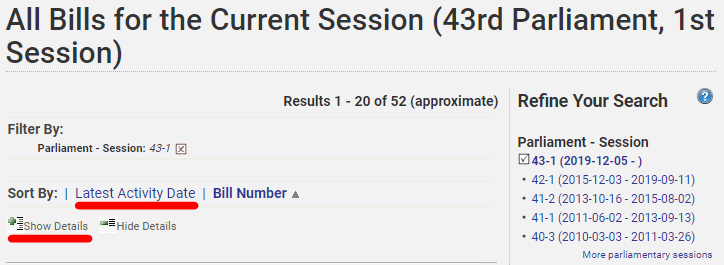
By clicking on the “Latest Activity Date”, the bills with the most recent activity are pulled to the top of the page in descending order.
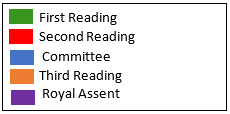
Now that we’ve manipulated the list to show the bills with the most recent activity first, we can use the “Show Details” filter to reveal more information concerning the activity of each bill. Once expanded, we can now see the last stage the bill has completed under the “Last stage Complete” section and by the bar graph in the top right corner (shown below):
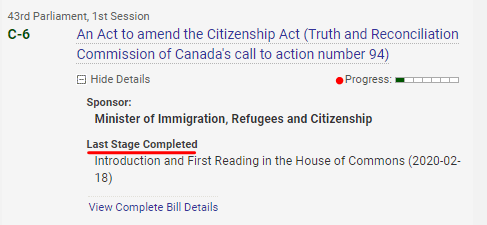
It’s important to note that the data contained in this section reflects the latest stage that the bill has completed, and not necessarily the stage the bill is currently being considered under. For instance, though the entry shown above for Bill C-6 only mentions the first reading, the bill is currently being considered for second reading. If you click the “View Complete Bill Details” link, you will be taken to a page that shows that Bill C-6 sat for second reading on February 24, though it has not yet completed the second reading stage.
For another tool that shows you the latest stage a bill has reached and not necessarily completed, select the “Legislative at a Glance” option located on the left-hand side of the LEGISinfo home page. “Legislation at a Glance” provides an overview of bills under consideration in either the Senate or the House of Commons